How to Keep Flower Fresh in Mylar Bags: A Storage Guide
The right mylar bag protects your product, but the bag alone does not decide how long it stays fresh. How you fill it, seal it and store it matters just as much. This guide explains what actually breaks down packaged flower, how mylar helps, and the storage habits that keep product in good condition from the back room to the customer.
Contents
- What degrades packaged flower
- How mylar bags help
- Storage best practices
- What no bag can do
- Quick storage checklist
- FAQ
What degrades packaged flower
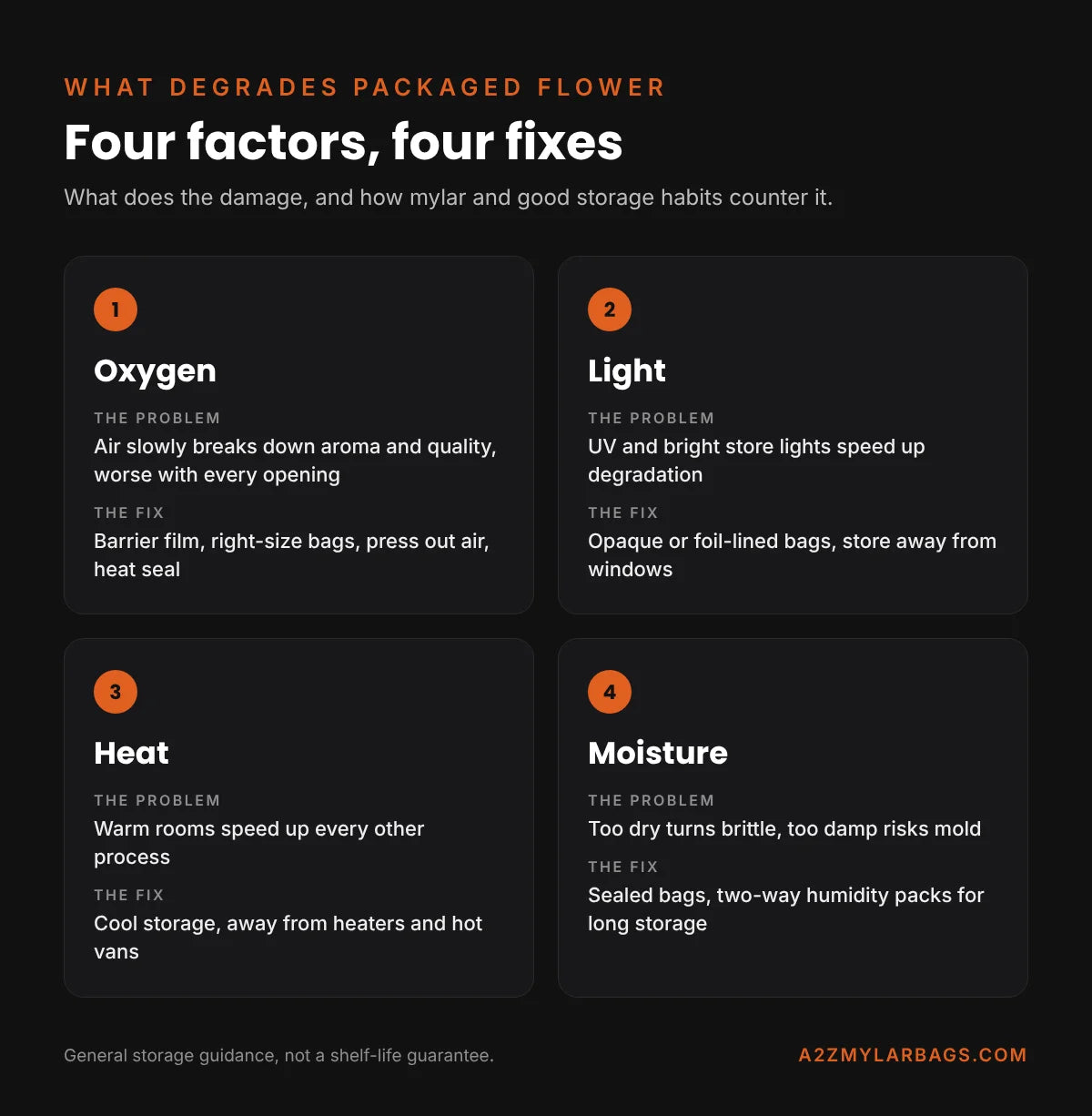
Four things do most of the damage once product is packed:
- Oxygen. Air slowly breaks down the compounds that give product its aroma and quality. The more air in the bag, and the more often it is opened, the faster this happens.
- Light. Light, especially UV, speeds up degradation. Clear packaging left under store lights or near a window is the classic mistake.
- Heat. Warm storage speeds up every other process. A hot stock room or a delivery van in summer can undo careful packaging.
- Moisture. Too dry and product turns brittle. Too damp and you risk mold. Stable humidity is the goal.
How mylar bags help
Mylar bags are built to put a firm barrier between your product and the environment. Here is how each feature addresses the four factors above:
| Feature | What it protects against |
|---|---|
| Barrier film | Oxygen and moisture passing through the bag |
| Opaque or foil-lined body | Light, including UV |
| Heat seal | Air getting in before first opening, plus clear evidence of tampering |
| Resealable zipper | Air and odor after the customer opens the bag |
| Food-grade material | Contamination from the packaging itself |
Packaging technology keeps moving, too. As MJBizDaily has reported, some packaging makers now use modified atmosphere films borrowed from the food industry, the same idea that keeps coffee and fresh produce in good shape over long shipping routes.
Storage best practices
1. Match the bag to the fill weight
Empty space means trapped air. Use a 3.5g bag for an eighth, a 1 oz bag for an ounce and 1 lb bags for bulk. Oversized bags look generous but leave more air around the product.
2. Press out the air before sealing
Gently press excess air out before you close the zipper or heat seal. Do it with care so you do not crush the product.
3. Heat seal for storage and transport
The zipper is for the customer. For anything going into storage or onto a delivery route, heat seal above the zipper. A heat seal keeps air out until first opening and shows clearly if a bag has been opened.
4. Control humidity
For longer storage, many brands add a two-way humidity pack to the bag or bin. It helps hold humidity steady, which protects against both drying out and excess moisture.
5. Store cool, dark and dry
Keep stock in a cool room away from windows, heaters and direct sunlight. Even opaque bags last longer in stable conditions.
6. Rotate stock: first in, first out
Date your batches and sell the oldest first. The best packaging cannot help product that sits on a shelf for months.
7. Handle bags as little as possible
Every squeeze and every opening moves air and product around. Pack once, seal once and leave it until it is sold.
What no bag can do
A good bag preserves the condition your product was in when it was packed. It cannot fix product that was poorly dried or cured, and it cannot reverse damage that has already happened.
Be wary of any packaging that promises it will "prevent mold" or "lock in terpenes" for a set number of months. State regulators, including in Washington and Colorado, have scrutinized unverified packaging claims like these, as MJBizDaily reported. Choose packaging on its construction, then back it up with good storage habits.
Quick storage checklist
- Bag size matched to fill weight
- Excess air pressed out before sealing
- Heat sealed for storage and transport
- Humidity pack added for long storage
- Stored cool, dark and dry
- Batches dated and rotated first in, first out
- Bags handled as little as possible
Choosing bags for a dispensary shelf? Read our complete dispensary guide to 3.5g mylar bags.
FAQ
How long does flower stay fresh in a mylar bag?
It depends on how well the product was dried and cured, how the bag was sealed and how it is stored. A sealed mylar bag kept cool, dark and dry gives product a strong level of protection, but no honest supplier can promise a fixed number of months for every product.
Are mylar bags better than plastic bags for storage?
Yes, for most purposes. Standard plastic bags let air and light through and do not contain odor well. Mylar bags add a barrier against oxygen, moisture and light, and can be heat sealed.
Should I heat seal or just use the zipper?
Both. Heat seal for storage and transport, then let the customer use the zipper after first opening.
Do I need humidity packs?
Not for product that sells quickly. For longer storage, a two-way humidity pack helps keep conditions stable.
Are your mylar bags food grade?
Yes. Our mylar bags are made from food-grade material, are heat sealable and have a resealable zipper.
Stock up on the right sizes: browse all mylar bags, or add structure and shelf presence with mylar bags with boxes.